You’ve probably heard of the Strait of Hormuz – images of giant oil tankers, US Navy warships, and tense political headlines come to mind. But did you know that right here, in this very strait, there is an island called Hormuz with soil as red as blood and as golden as saffron? Or that thousands of European and Asian tourists visit this region every year without the slightest problem? In this article, we will explain both the strategic reality and political tensions of this vital region, and also show you why an ordinary traveler has nothing to worry about. If you are planning to travel to southern Iran (Qeshm Island, Hormuz Island, Bandar Abbas), read this guide to the end.
2026/06/15
The Story Behind the Name & Ancient History (From the Achaemenids to Today)
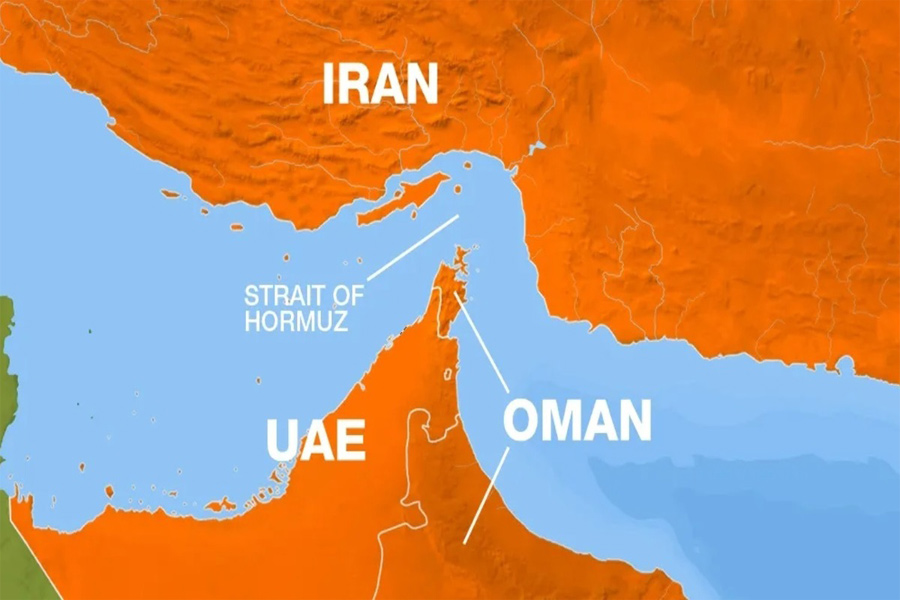
The Strait of Hormuz is a narrow waterway between Iran (Hormozgan Province) and the Musandam Peninsula of Oman and the UAE. It connects the Gulf of Oman to the Persian Gulf. At its narrowest point, it is only 33 kilometers (21 miles) wide – a speedboat can cross from one shore to the other in half an hour.
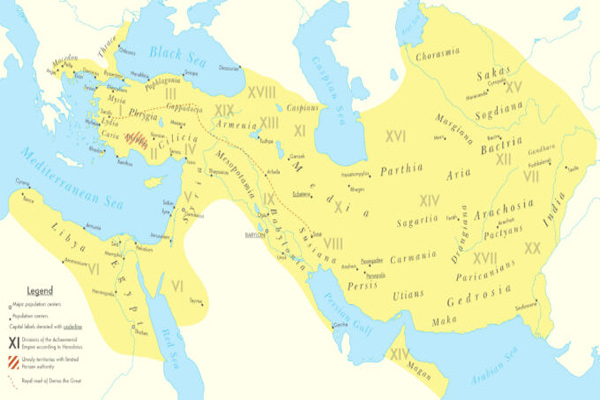
Where does the name "Hormuz" come from?
The name "Hormuz" has several proposed etymological roots:
1. From "Hormogh" – Historically, the old name was Hormogh. In the local dialect of Hormozgan Province, "Mogh" means "date palm." Thus, "Hormogh" may refer to a place associated with date palms.
2. From "Hor" + "Moghstan" – Some believe the name combines "Hor" (meaning waterway or strait) with "Moghstan" (an ancient province in southern Iran). Together, this would mean "waterway of the palm groves."
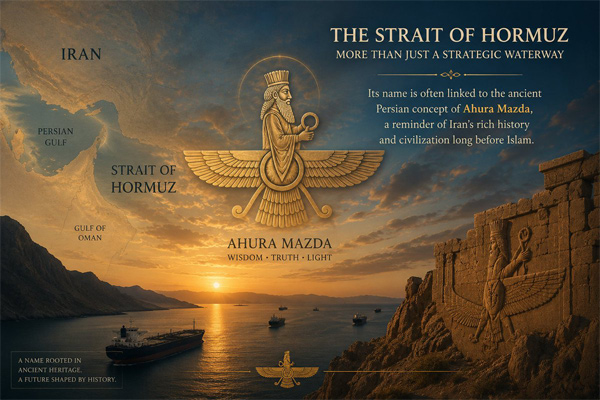
3. From "Ahura Mazda" – Many people also believe that "Hormuz" is derived from Ahura Mazda, the supreme deity in Zoroastrianism. This connection reflects the deep historical and cultural influence of ancient Persian religion in the region.
These etymological layers show how the name "Hormuz" carries meanings linked to both the natural geography (date palms and waterways) and the spiritual heritage (Ahura Mazda) of southern Iran.
2,500 Years of History
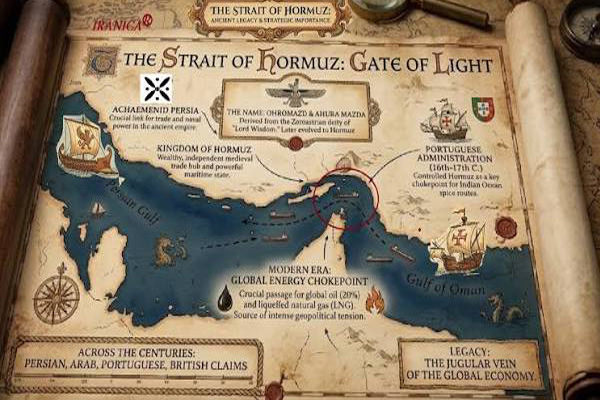
Iran's presence in this strait dates back to Darius the Great of the Achaemenid Empire (522–486 BCE). Darius, understanding the value of sea routes, mapped the maritime passage from the Indus River to the Persian Gulf and created a safe corridor for goods such as gold, ivory, and textiles. At that time, the Strait of Hormuz was the economic and military bottleneck of the Persian Empire.
Today, Iran still controls the northern coast and strategic islands – Qeshm (the largest island in the Persian Gulf), Hormuz, Abu Musa, and the Greater and Lesser Tunbs – all of which are accessible to tourists.
Strait of Hormuz: Waters Under the Sovereignty of Iran and Oman, Not International Waters
Under the 1982 United Nations Convention on the Law of the Sea (UNCLOS), particularly Articles 7 and 15, the delimitation of territorial seas between states with opposite or adjacent coasts is based on the median line (equidistance principle). At the narrowest point of the Strait of Hormuz, with a width of 21 nautical miles, both Iran and Oman are entitled to a 12-nautical-mile territorial sea. Consequently, the entire width of the strait falls within the territorial waters of Iran and Oman, leaving no area of high seas or international waters between them. Therefore, while the Strait of Hormuz serves as an international strait subject to the transit passage regime for navigation, the waters themselves are not international waters; they are part of the territorial waters of Iran and Oman.
Why Is the Strait of Hormuz So Important to the World? (Energy & US-Iran Rivalry)
Economic & Energy Significance
Every day, more than 17 million barrels of oil (about 20–25% of the world's oil consumption) pass through this strait. Additionally, roughly one quarter of the world’s liquefied natural gas (LNG) is shipped through this same waterway.
Countries like Saudi Arabia, Iraq, Kuwait, the UAE, Qatar, and Bahrain are completely dependent on the Strait of Hormuz to export their oil and gas. On the other side, China, Japan, India, and South Korea also rely on the security of this waterway for their energy imports.
The US-Iran Tension: The Core Issue
The United States, with its Fifth Fleet based in Bahrain, has repeatedly insisted that "freedom of navigation in the Strait of Hormuz is an international right." In contrast, the Islamic Republic of Iran has stated that in the face of serious threats or crippling sanctions, it could disrupt traffic through the strait.
A potential flashpoint: This confrontation makes the Strait of Hormuz one of the most sensitive points on the planet. Iran has capabilities such as mine-laying, fast attack boats, anti-ship missiles, and small submarines for deterrence. The US responds with aircraft carriers and advanced defense systems.
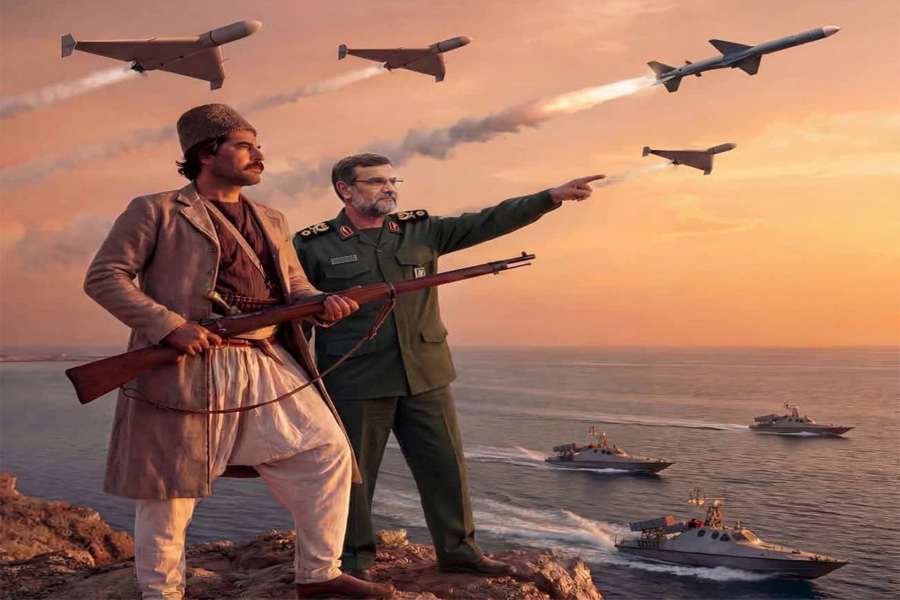
But the Americans are gravely mistaken if they do not realize that the Strait of Hormuz will be their graveyard, and that they will never be able to open it or carry out a military attack on it. Just as it became the graveyard of the Portuguese and the British, and just as the brave Iranian men in years past liberated the Strait of Hormuz and the Persian Gulf from their grasp and put an end to their occupation.
Historical Flashpoints (US & Iran)
• The Tanker War (1984–1988): During the Iran–Iraq War, both sides attacked oil tankers. The peak was Operation Praying Mantis (1988) , when the US Navy destroyed several Iranian oil platforms and a frigate. Tragically, during the same period, the US warship USS Vincennes shot down an Iranian passenger airliner (Iran Air Flight 655), killing all 290 people on board – a wound that still haunts relations between the two countries.
• Tanker Seizures in 2019: After the US withdrew from the JCPOA (nuclear deal) and reimposed sanctions, a series of seizures and sabotage attacks on tankers near the Strait of Hormuz raised tensions to their highest level in years.
⚠️ Important note for travelers: All of these conflicts were military engagements between naval forces – no tourist or civilian passenger vessels have ever been targeted. The Strait of Hormuz is an international waterway, and attacking civilian ships is considered a global taboo by both sides.
Is It Safe to Travel to the Strait of Hormuz Right Now? (Updated June 2026)
This is the most important question on your mind. The answer is yes – and it is getting safer by the day.
The Current Situation for Travelers
With the historic peace agreement finalized, the Strait of Hormuz is transitioning from a conflict zone to a fully open international waterway. Here is the reality on the ground:
1. The war is ending – immediately and permanently. As of June 15, 2026, all military operations on all fronts have stopped. The agreement has been finalized, and the official signing is scheduled for June 19 .
2. The naval blockade has ended. The US has lifted its blockade of Iranian ports, and Iran is reopening the Strait of Hormuz for normal traffic .
3. Tourists were never targeted. Throughout the entire period of tension and conflict, no tourist group (foreign or domestic) was ever attacked on the Iranian islands of the Persian Gulf. Iran has always prioritized tourist security on key islands like Qeshm and Hormuz.
4. The region is more stable than it has been in months. With both sides committed to a 60-day negotiation period for a final agreement, the immediate threat of military escalation is gone .
5. The only precaution: Like any border region in the world, avoid entering restricted military zones (clearly marked with signs). This is standard advice for travel anywhere.
The Current Situation for Travelers
With the historic peace agreement finalized, the Strait of Hormuz is transitioning from a conflict zone to a fully open international waterway. Here is the reality on the ground:
The war is ending – immediately and permanently. As of June 15, 2026, all military operations on all fronts have stopped. The agreement has been finalized, and the official signing is scheduled for June 19 .
The naval blockade has ended. The US has lifted its blockade of Iranian ports, and Iran is reopening the Strait of Hormuz for normal traffic .
Tourists were never targeted. Throughout the entire period of tension and conflict, no tourist group (foreign or domestic) was ever attacked on the Iranian islands of the Persian Gulf. Iran has always prioritized tourist security on key islands like Qeshm and Hormuz.
The region is more stable than it has been in months. With both sides committed to a 60-day negotiation period for a final agreement, the immediate threat of military escalation is gone .
The only precaution: Like any border region in the world, avoid entering restricted military zones (clearly marked with signs). This is standard advice for travel anywhere.
Why This Peace Deal Makes Travel Even Easier
Flights and shipping will return to normal: With the lifting of the blockade and the reopening of the strait, commercial traffic – including flights to Bandar Abbas and Qeshm – will operate normally.
Oil prices are dropping: The announcement of the deal has already caused oil prices to drop more than four percent, signaling global confidence in the agreement .
International relief: The United Nations Secretary-General has called the agreement a "critical step" toward resolving the Middle East conflict, and European nations have announced they are prepared to lift sanctions on Iran .
Final Word on Safety (June 2026)
If you plan to visit Hormuz Island, Qeshm, Hengam, or Bandar Abbas, now is an excellent time to go. The war is over. The peace agreement is signed. The strait is reopening. The headlines you see about tension are transitioning into headlines about peace and economic recovery.
What you see in the news today is the end of the war – not the beginning of one.
Tourist Attractions of the Strait of Hormuz (Reasons to Visit)
Now let us get to the fun part. The Strait of Hormuz is not just oil and warships – it is home to the most astonishing geological and cultural wonders of the Middle East.
Hormuz Island (The Rainbow Earth Paradise)
Red soil of Hormuz (Gelak): Edible and natural! Locals use it in cooking and pottery.
Salt valley and salt cave: Walls of pink and white salt crystals.
Portuguese Castle: A remnant of Portuguese colonization from the 16th century.
Qeshm Island (The Largest Island in the Persian Gulf)
Hara mangrove forests: Trees growing in saltwater, home to endangered hawksbill turtles.
Stars Valley: Strange erosion shapes that look like a Martian landscape.
Salt domes: The world's oldest salt caves, over 500 million years old.
Hengam Island
Pink and grey dolphins swimming around your boat.
A local handicrafts market with paintings on seashells.
Bandar Abbas & Traditional Docks
Watch huge wooden lenj boats being built the same way they were 100 years ago.
Visit the fish market at dawn to see giant tuna being unloaded.
Practical Travel Guide (Costs, Routes, Best Time)
Best Time to Visit
From mid-October to mid-April (autumn and winter). Temperatures range from 20–25°C (68–77°F) – perfect for hiking and photography.
Warning: In summer (June to September), temperatures exceed 50°C (122°F) – truly unbearable.
How to Get There
By plane: Bandar Abbas International Airport and Qeshm Airport (daily flights from Tehran, Shiraz, Isfahan).
By ferry/lenj boat: From Bandar Abbas's "Pol" pier to Qeshm – one lenj boat every hour (45 minutes, about 50,000 tomans / ~$1 USD). From Qeshm to Hormuz Island by local boat (30 minutes). With the reopening of the strait, all normal maritime operations will resume.
Environmental Challenges (What You Should Know)
Apart from the recent war and political tensions, there are real environmental challenges in the region:
Environmental pollution: The high volume of tanker traffic increases the risk of oil spills. A few ship collisions have caused minor pollution in the past. As a responsible traveler, do not throw any trash into the sea.
Alternative routes to reduce dependence: Saudi Arabia has built the East‑West pipeline (to Yanbu) and the UAE has built the Abu Dhabi–Fujairah pipeline to bypass the Strait of Hormuz. However, these only handle a small fraction of the oil – around 80% of Persian Gulf oil still passes through the strait.
Conclusion: What Does the Strait of Hormuz Mean for a Traveler in 2026?
The Strait of Hormuz has two completely different faces:
Face one (the past): A sensitive geopolitical flashpoint, the world's energy artery, the scene of the Tanker War, the tragedy of Flight 655, and the recent 2026 war.
Face two (the present and future): The site of a historic peace agreement between Iran and the United States, an extraordinary tourist region with islands unlike any other on earth, warm and hospitable southern Iranian people, delicious food, and low costs.
The war is over. The peace deal is signed. The strait is reopening.
If you are an ordinary traveler who wants to experience pristine nature, ancient history, and authentic Iranian culture, now is the time to visit. As long as you do not enter restricted military zones and follow basic local courtesies, you will have a safe and unforgettable trip.
So book your ticket, pack your sunscreen, and get ready to see one of the most colorful islands on the planet – at the moment peace returns to the Strait of Hormuz.
📚 References & Further Reading
Monthly reports from the International Energy Agency (IEA)
Analysis published in Foreign Policy and The Economist
Center for Middle East Strategic Studies (CMES) documents
Xinhua News, PressTV, and Vietnam.vn coverage of the 2026 US-Iran peace agreement
Inbound Persia Travel Agency (IPTA)
📌 Your Opinion?
Have you ever traveled to southern Iran? What was your experience on Hormuz or Qeshm Islands? Did this updated information about the peace deal help ease your concerns? Let us know in the comments below.
The Story Behind the Name & Ancient History (From the Achaemenids to Today)
The Strait of Hormuz is a narrow waterway between Iran (Hormozgan Province) and the Musandam Peninsula of Oman and the UAE. It connects the Gulf of Oman to the Persian Gulf. At its narrowest point, it is only 33 kilometers (21 miles) wide – a speedboat can cross from one shore to the other in half an hour.
Where does the name "Hormuz" come from?
The name "Hormuz" has several proposed etymological roots:
1. From "Hormogh" – Historically, the old name was Hormogh. In the local dialect of Hormozgan Province, "Mogh" means "date palm." Thus, "Hormogh" may refer to a place associated with date palms.
2. From "Hor" + "Moghstan" – Some believe the name combines "Hor" (meaning waterway or strait) with "Moghstan" (an ancient province in southern Iran). Together, this would mean "waterway of the palm groves."
3. From "Ahura Mazda" – Many people also believe that "Hormuz" is derived from Ahura Mazda, the supreme deity in Zoroastrianism. This connection reflects the deep historical and cultural influence of ancient Persian religion in the region.
These etymological layers show how the name "Hormuz" carries meanings linked to both the natural geography (date palms and waterways) and the spiritual heritage (Ahura Mazda) of southern Iran.
2,500 Years of History
Iran's presence in this strait dates back to Darius the Great of the Achaemenid Empire (522–486 BCE). Darius, understanding the value of sea routes, mapped the maritime passage from the Indus River to the Persian Gulf and created a safe corridor for goods such as gold, ivory, and textiles. At that time, the Strait of Hormuz was the economic and military bottleneck of the Persian Empire.
Today, Iran still controls the northern coast and strategic islands – Qeshm (the largest island in the Persian Gulf), Hormuz, Abu Musa, and the Greater and Lesser Tunbs – all of which are accessible to tourists.
Strait of Hormuz: Waters Under the Sovereignty of Iran and Oman, Not International Waters
Under the 1982 United Nations Convention on the Law of the Sea (UNCLOS), particularly Articles 7 and 15, the delimitation of territorial seas between states with opposite or adjacent coasts is based on the median line (equidistance principle). At the narrowest point of the Strait of Hormuz, with a width of 21 nautical miles, both Iran and Oman are entitled to a 12-nautical-mile territorial sea. Consequently, the entire width of the strait falls within the territorial waters of Iran and Oman, leaving no area of high seas or international waters between them. Therefore, while the Strait of Hormuz serves as an international strait subject to the transit passage regime for navigation, the waters themselves are not international waters; they are part of the territorial waters of Iran and Oman.
Why Is the Strait of Hormuz So Important to the World? (Energy & US-Iran Rivalry)
Economic & Energy Significance
Every day, more than 17 million barrels of oil (about 20–25% of the world's oil consumption) pass through this strait. Additionally, roughly one quarter of the world’s liquefied natural gas (LNG) is shipped through this same waterway.
Countries like Saudi Arabia, Iraq, Kuwait, the UAE, Qatar, and Bahrain are completely dependent on the Strait of Hormuz to export their oil and gas. On the other side, China, Japan, India, and South Korea also rely on the security of this waterway for their energy imports.
The US-Iran Tension: The Core Issue
The United States, with its Fifth Fleet based in Bahrain, has repeatedly insisted that "freedom of navigation in the Strait of Hormuz is an international right." In contrast, the Islamic Republic of Iran has stated that in the face of serious threats or crippling sanctions, it could disrupt traffic through the strait.
A potential flashpoint: This confrontation makes the Strait of Hormuz one of the most sensitive points on the planet. Iran has capabilities such as mine-laying, fast attack boats, anti-ship missiles, and small submarines for deterrence. The US responds with aircraft carriers and advanced defense systems.
But the Americans are gravely mistaken if they do not realize that the Strait of Hormuz will be their graveyard, and that they will never be able to open it or carry out a military attack on it. Just as it became the graveyard of the Portuguese and the British, and just as the brave Iranian men in years past liberated the Strait of Hormuz and the Persian Gulf from their grasp and put an end to their occupation.
Historical Flashpoints (US & Iran)
• The Tanker War (1984–1988): During the Iran–Iraq War, both sides attacked oil tankers. The peak was Operation Praying Mantis (1988) , when the US Navy destroyed several Iranian oil platforms and a frigate. Tragically, during the same period, the US warship USS Vincennes shot down an Iranian passenger airliner (Iran Air Flight 655), killing all 290 people on board – a wound that still haunts relations between the two countries.
• Tanker Seizures in 2019: After the US withdrew from the JCPOA (nuclear deal) and reimposed sanctions, a series of seizures and sabotage attacks on tankers near the Strait of Hormuz raised tensions to their highest level in years.
⚠️ Important note for travelers: All of these conflicts were military engagements between naval forces – no tourist or civilian passenger vessels have ever been targeted. The Strait of Hormuz is an international waterway, and attacking civilian ships is considered a global taboo by both sides.
Is It Safe to Travel to the Strait of Hormuz Right Now? (Updated June 2026)
This is the most important question on your mind. The answer is yes – and it is getting safer by the day.
The Current Situation for Travelers
With the historic peace agreement finalized, the Strait of Hormuz is transitioning from a conflict zone to a fully open international waterway. Here is the reality on the ground:
1. The war is ending – immediately and permanently. As of June 15, 2026, all military operations on all fronts have stopped. The agreement has been finalized, and the official signing is scheduled for June 19 .
2. The naval blockade has ended. The US has lifted its blockade of Iranian ports, and Iran is reopening the Strait of Hormuz for normal traffic .
3. Tourists were never targeted. Throughout the entire period of tension and conflict, no tourist group (foreign or domestic) was ever attacked on the Iranian islands of the Persian Gulf. Iran has always prioritized tourist security on key islands like Qeshm and Hormuz.
4. The region is more stable than it has been in months. With both sides committed to a 60-day negotiation period for a final agreement, the immediate threat of military escalation is gone .
5. The only precaution: Like any border region in the world, avoid entering restricted military zones (clearly marked with signs). This is standard advice for travel anywhere.
The Current Situation for Travelers
With the historic peace agreement finalized, the Strait of Hormuz is transitioning from a conflict zone to a fully open international waterway. Here is the reality on the ground:
The war is ending – immediately and permanently. As of June 15, 2026, all military operations on all fronts have stopped. The agreement has been finalized, and the official signing is scheduled for June 19 .
The naval blockade has ended. The US has lifted its blockade of Iranian ports, and Iran is reopening the Strait of Hormuz for normal traffic .
Tourists were never targeted. Throughout the entire period of tension and conflict, no tourist group (foreign or domestic) was ever attacked on the Iranian islands of the Persian Gulf. Iran has always prioritized tourist security on key islands like Qeshm and Hormuz.
The region is more stable than it has been in months. With both sides committed to a 60-day negotiation period for a final agreement, the immediate threat of military escalation is gone .
The only precaution: Like any border region in the world, avoid entering restricted military zones (clearly marked with signs). This is standard advice for travel anywhere.
Why This Peace Deal Makes Travel Even Easier
Flights and shipping will return to normal: With the lifting of the blockade and the reopening of the strait, commercial traffic – including flights to Bandar Abbas and Qeshm – will operate normally.
Oil prices are dropping: The announcement of the deal has already caused oil prices to drop more than four percent, signaling global confidence in the agreement .
International relief: The United Nations Secretary-General has called the agreement a "critical step" toward resolving the Middle East conflict, and European nations have announced they are prepared to lift sanctions on Iran .
Final Word on Safety (June 2026)
If you plan to visit Hormuz Island, Qeshm, Hengam, or Bandar Abbas, now is an excellent time to go. The war is over. The peace agreement is signed. The strait is reopening. The headlines you see about tension are transitioning into headlines about peace and economic recovery.
What you see in the news today is the end of the war – not the beginning of one.
Tourist Attractions of the Strait of Hormuz (Reasons to Visit)
Now let us get to the fun part. The Strait of Hormuz is not just oil and warships – it is home to the most astonishing geological and cultural wonders of the Middle East.
Hormuz Island (The Rainbow Earth Paradise)
Red soil of Hormuz (Gelak): Edible and natural! Locals use it in cooking and pottery.
Salt valley and salt cave: Walls of pink and white salt crystals.
Portuguese Castle: A remnant of Portuguese colonization from the 16th century.
Qeshm Island (The Largest Island in the Persian Gulf)
Hara mangrove forests: Trees growing in saltwater, home to endangered hawksbill turtles.
Stars Valley: Strange erosion shapes that look like a Martian landscape.
Salt domes: The world's oldest salt caves, over 500 million years old.
Hengam Island
Pink and grey dolphins swimming around your boat.
A local handicrafts market with paintings on seashells.
Bandar Abbas & Traditional Docks
Watch huge wooden lenj boats being built the same way they were 100 years ago.
Visit the fish market at dawn to see giant tuna being unloaded.
Practical Travel Guide (Costs, Routes, Best Time)
Best Time to Visit
From mid-October to mid-April (autumn and winter). Temperatures range from 20–25°C (68–77°F) – perfect for hiking and photography.
Warning: In summer (June to September), temperatures exceed 50°C (122°F) – truly unbearable.
How to Get There
By plane: Bandar Abbas International Airport and Qeshm Airport (daily flights from Tehran, Shiraz, Isfahan).
By ferry/lenj boat: From Bandar Abbas's "Pol" pier to Qeshm – one lenj boat every hour (45 minutes, about 50,000 tomans / ~$1 USD). From Qeshm to Hormuz Island by local boat (30 minutes). With the reopening of the strait, all normal maritime operations will resume.
Environmental Challenges (What You Should Know)
Apart from the recent war and political tensions, there are real environmental challenges in the region:
Environmental pollution: The high volume of tanker traffic increases the risk of oil spills. A few ship collisions have caused minor pollution in the past. As a responsible traveler, do not throw any trash into the sea.
Alternative routes to reduce dependence: Saudi Arabia has built the East‑West pipeline (to Yanbu) and the UAE has built the Abu Dhabi–Fujairah pipeline to bypass the Strait of Hormuz. However, these only handle a small fraction of the oil – around 80% of Persian Gulf oil still passes through the strait.
Conclusion: What Does the Strait of Hormuz Mean for a Traveler in 2026?
The Strait of Hormuz has two completely different faces:
Face one (the past): A sensitive geopolitical flashpoint, the world's energy artery, the scene of the Tanker War, the tragedy of Flight 655, and the recent 2026 war.
Face two (the present and future): The site of a historic peace agreement between Iran and the United States, an extraordinary tourist region with islands unlike any other on earth, warm and hospitable southern Iranian people, delicious food, and low costs.
The war is over. The peace deal is signed. The strait is reopening.
If you are an ordinary traveler who wants to experience pristine nature, ancient history, and authentic Iranian culture, now is the time to visit. As long as you do not enter restricted military zones and follow basic local courtesies, you will have a safe and unforgettable trip.
So book your ticket, pack your sunscreen, and get ready to see one of the most colorful islands on the planet – at the moment peace returns to the Strait of Hormuz.
📚 References & Further Reading
Monthly reports from the International Energy Agency (IEA)
Analysis published in Foreign Policy and The Economist
Center for Middle East Strategic Studies (CMES) documents
Xinhua News, PressTV, and Vietnam.vn coverage of the 2026 US-Iran peace agreement
Inbound Persia Travel Agency (IPTA)
📌 Your Opinion?
Have you ever traveled to southern Iran? What was your experience on Hormuz or Qeshm Islands? Did this updated information about the peace deal help ease your concerns? Let us know in the comments below.
Iran Tour Packages, Iran Travel Agency, Inbound Persia