The Role of Castles in Persian Civilization
Castles were not merely sturdy strongholds against enemy invasions, but also thriving centers of civilization that shaped the culture, economy, and politics of societies. These strategic buildings, with their privileged positions atop hills, mountain slopes, or near rivers, dominated their surrounding areas and served as commercial, administrative, and religious centers. Within their robust walls, bustling marketplaces took shape, exchange offices flourished, and trade caravans traveled under their protection. Castles also became centers of administrative power, where rulers managed state affairs, and places of worship such as churches, temples, or mosques were built inside them.
What is a Castle? (Qaleh in Persian)
According to the Dez (Persian dictionary), "castle" (Qaleh) means a high rampart or refuge, built atop a mountain or a high place for security. These structures were often designed with right-angled geometry. In Iran, fortified dwellings have been built with various plans since ancient times. Castles from the Parthian period still exist in Iran.
Materials Used in Castle Construction
Geographical and economic conditions, as well as the extent of borders, influenced the choice of materials. Unfired clay brick, along with rubble stone and gypsum mortar, were among the most common local construction traditions. The use of cut-and-dressed stones, especially for walling, was also favored.
Castles by Climate and Function
By Climate:
• Mountainous Castles: Built with irregular floor plans within difficult, rugged terrain.
• Plain and Valley Castles: The initial form and nucleus of cities, built alongside rivers, roads, and qanats.
By Function:
• Residential Castles: Built by landowners for their families, dependents, and livestock.
• Caravanserai Castles: Refuges for temporary lodging and security of travelers.
• Military Castles: Governmental centers for housing troops and protecting cities. Among these, the most important are Arg (citadels) and Dokhtar castles – the latter meaning "Maiden Castle" or a metaphor for impregnability. These were especially important in pre-Islamic Iran, particularly during the Sasanian era.
Top 10 Castles in Iran – A Journey Through History & Legend
If you are planning travel to Iran and love ancient architecture, mysterious fortresses, and epic stories, then visiting Iran's castles is an unforgettable experience. From the world's largest adobe structure to a stone fortress hidden inside a rainforest, each castle tells a unique story of resistance, power, and intelligence.
In this complete guide, we introduce the 10 best castles in Iran, including Arg-e Bam, Rayen Castle, Narin Castle, Saryazd Castle, Babak Castle, Rudkhan Castle, Alamut Castle, Karim Khan Citadel, Falak ol-Aflak, and Ardashir Babakan Castle.
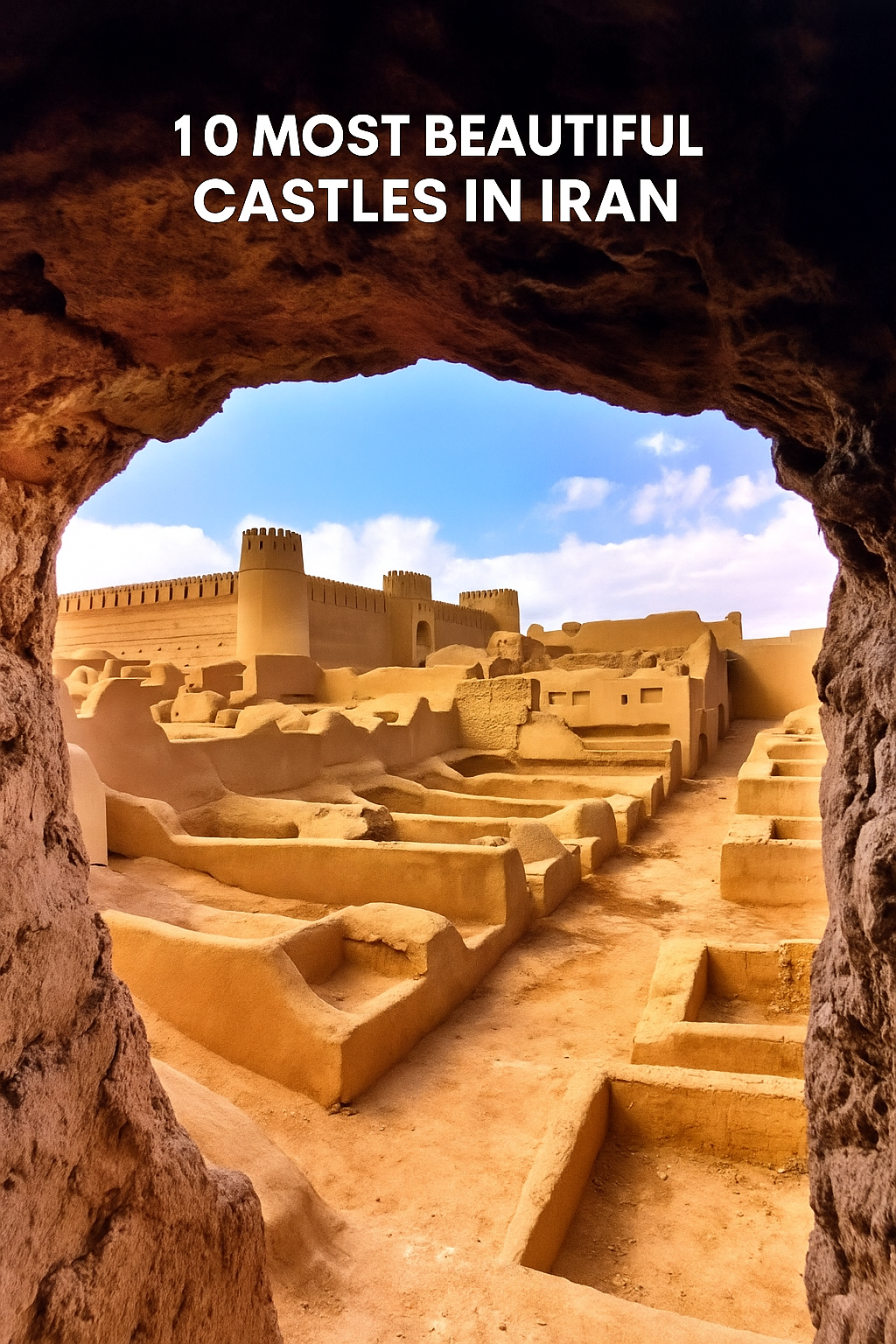
1. Bam Castle – The World's Largest Adobe Structure
Location: Bam, Kerman Province
Age: Over 2,500 years (Achaemenid to Safavid)
Best time to visit: Autumn & winter (October to February)
Difficulty: Easy – inside the city of Bam
Tip: Visit at sunset for golden photos and magical silence.
Arg-e Bam is not just a castle – it's a complete city made of mudbrick. It includes houses, a bazaar, a school, a stable, a prison, and water reservoirs. Destroyed by a devastating earthquake in 2003, it was rebuilt by UNESCO and Iran in one of history's most impressive restoration projects.

2. Rayen Castle – The Well-Preserved Twin of Bam
Location: Rayen, 100 km from Bam
Age: Late Sassanid to Safavid
Difficulty: Easy – paved road to entrance
Special feature: Local pottery workshops at the foot of the castle.
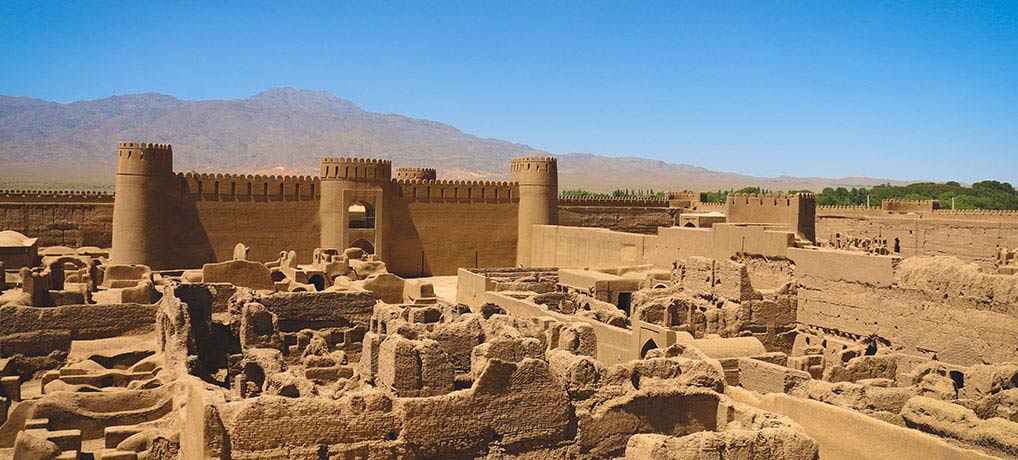
Rayen Castle looks like Arg-e Bam but is better preserved because it survived the 2003 earthquake. Its watchtowers, underground cellars, and ethnographic museum offer a genuine look at desert life in ancient Persia.
3. Narin Castle (Narin Qaleh) – A 3,000-Year-Old Mystery
Location: Meybod, Yazd Province
Age: Over 3,000 years (pre-Median)
Difficulty: Very easy – in the heart of Meybod city
Nearby attraction: Ziloo (traditional carpet) Museum.
Narin Castle is one of the oldest adobe structures in Iran. It has mysterious underground tunnels, hidden rooms, and a central tower offering a panoramic view of Meybod's windcatchers and reservoirs.
4. Saryazd Castle – An Underground City in the Desert
Location: 45 km from Yazd, Saryazd village
Age: Sassanid era
Difficulty: Moderate – well-signaled side road
Best for: Architecture lovers and photographers.
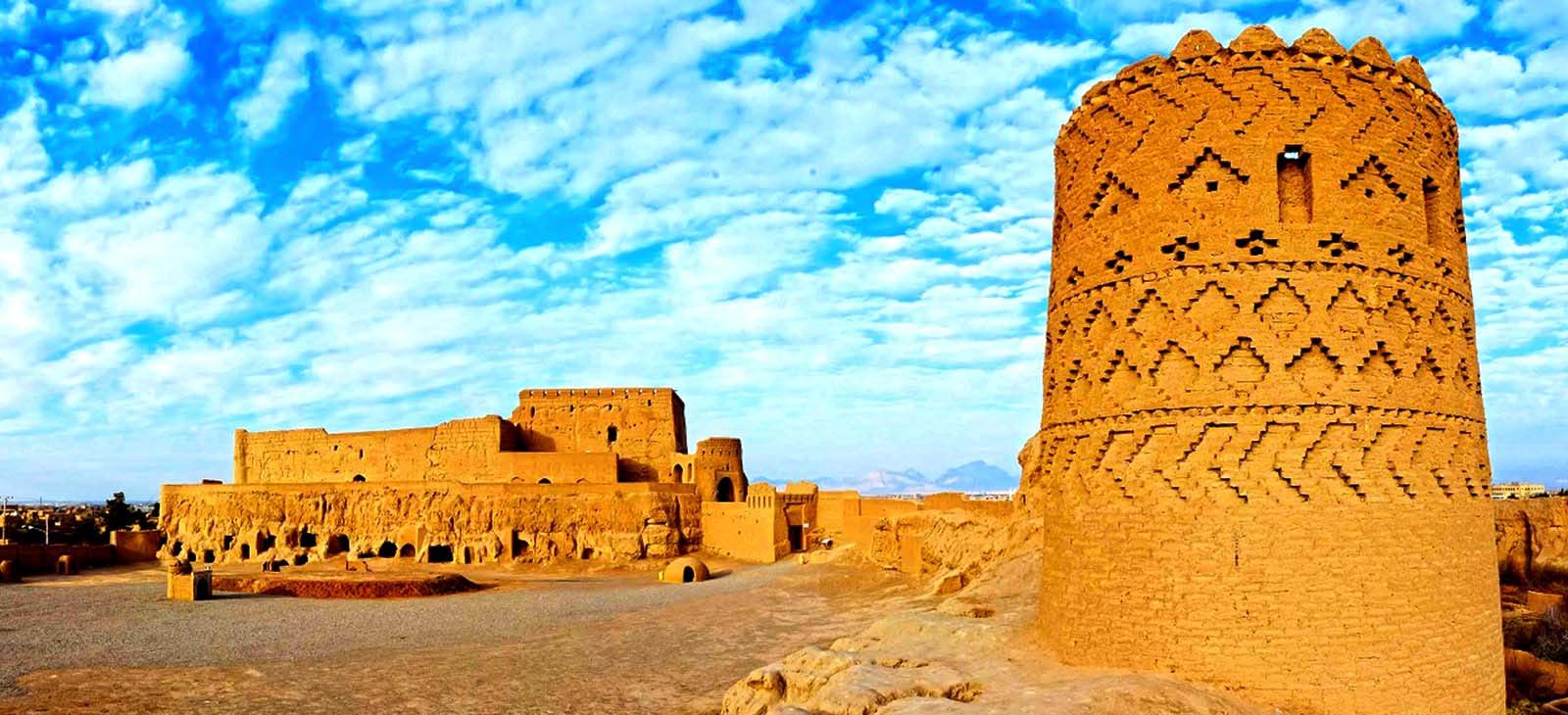
Saryazd Castle is an underground marvel. Tunnels, cold storage rooms, secret passages, and eight tall windcatchers kept families safe and cool for months during sieges.
.jpg "Saryazd Castle. Inbound Persia Travel Agency.")
5. Babak Castle – Fortress in the Clouds
Location: Kaleybar, East Azerbaijan
Age: Sassanid – early Islamic
Best time: Late spring to early autumn (May to September)
Difficulty: Hard – hiking boots and water essential.
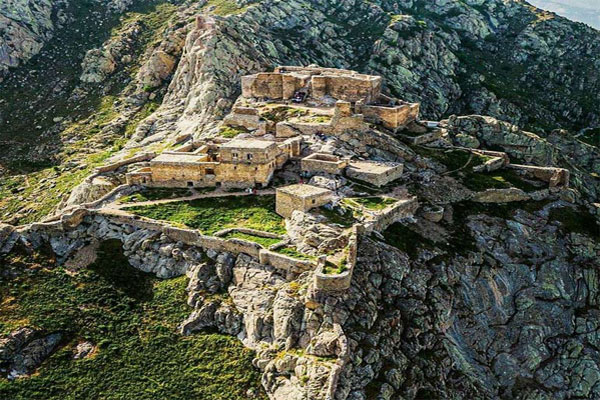
Babak Castle requires a 1-hour tough hike, but the reward is stunning: a black stone fortress floating above the clouds. This was the stronghold of Babak Khorramdin, a symbol of resistance against the Abbasid Caliphate.
6. Rudkhan Castle – The Jungle Fortress
Location: Fouman, Gilan Province
Age: Sassanid (possibly Ismaili)
Difficulty: Moderate – 15 minutes of stairs after parking
Tip: Go early morning for foggy, cinematic photos.
Unlike other castles, Rudkhan is hidden inside the dense Hyrcanian forests. The sound of birds, the smell of wet earth, and 65 brick watchtowers make it one of the most beautiful castles in Iran.

7. Alamut Castle – Eagle's Nest of the Assassins
Location: 100 km from Qazvin, Gazorkhan village
Age: Daylamite & Ismaili era
Difficulty: Hard – 40-minute uphill walk after a winding road
Closed in winter due to snow.
Alamut means "Eagle's Nest" – and it sits on a 2,200-meter rock. This was the legendary headquarters of Hasan Sabbah and the Ismailis. Only ruins remain, but the view of Alamut Valley is breathtaking.

8. Karim Khan Citadel (Arg-e Karim Khan) – A Royal Palace in Shiraz
Location: Central Shiraz
Age: Zand dynasty (approx. 250 years)
Difficulty: Very easy – inside the city
Combine with: Vakil Bazaar and Vakil Mosque.
Unlike military castles, this was the residence of Karim Khan Zand. It has four tall towers, beautiful tilework, a large pool with fountains, and a leaning tower (the "Pisa of Shiraz").

9. Falak ol-Aflak Castle – The Sky of Skies
Location: Khorramabad, Lorestan Province
Age: Late Sassanid to Safavid
Difficulty: Easy – inside the city
Best experience: Night visit with colorful lighting.
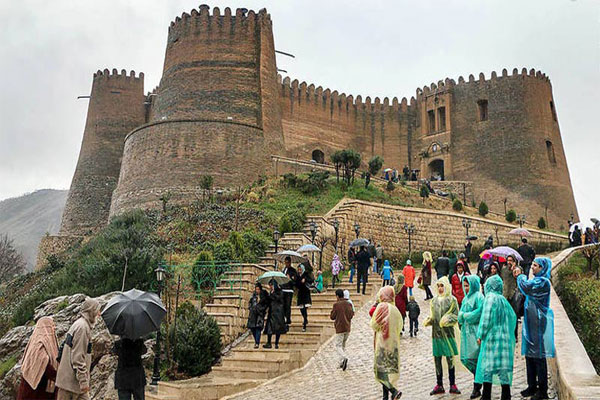
The name means "Heaven of Heavens". This massive castle sits on a hill in the center of Khorramabad. Some walls are 3 meters thick. Inside, there's a museum of archaeology and ethnography.
10. Ardashir Babakan Castle (Qaleh Dokhtar) – Mother of Iranian Ivans
Location: Firuzabad, Fars Province
Age: Early Sassanid (approx. 1,800 years ago)
Difficulty: Moderate – asphalt road close to the castle
Best for: History lovers, architects, and archaeology fans.
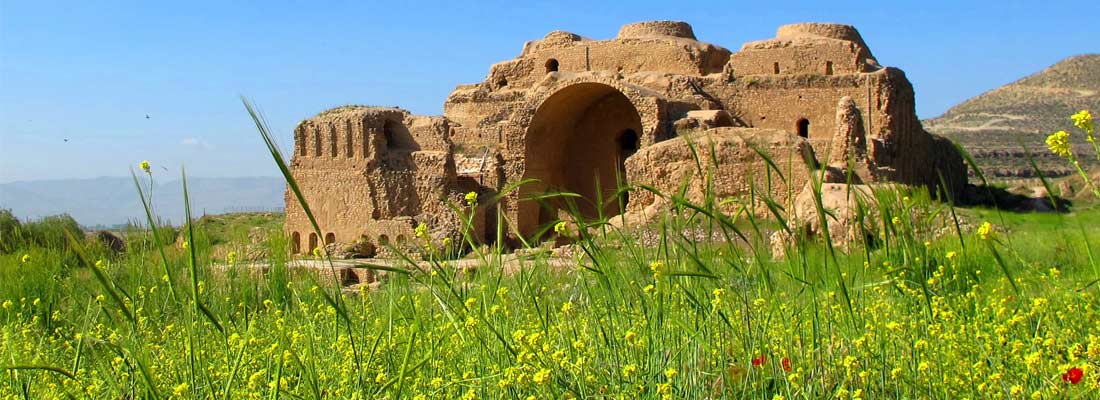
Built by the founder of the Sassanid Empire, this castle features the first four-sided dome that later inspired Islamic architecture. The name "Dokhtar" means "Goddess of Prosperity" in Pahlavi, not "daughter".
Conclusion
The primary function of castles throughout history was to maintain city security against invasions. However, over time, they also gained additional roles as refuges for civilians, commercial centers, seats of governance, and even places of worship. Castles can be classified into several types based on their geography and specific use. One important type is the Arg (citadel), which indicates urbanization and served as the ruling section of a castle complex.
Due to their strategic construction at the highest points of mountains, the main materials used in Iranian castles were unfired clay brick and mountain rubble stone. Nevertheless, the climatic and social conditions of each period also influenced their architectural design.
Iran is home to numerous castles built during ancient dynasties, many of which still stand today. Among them, Arg-e Bam, located on the central plateau of Iran, holds exceptional importance. This structure is the largest adobe (mud-brick) building in the world. Archaeological evidence dates Arg-e Bam to approximately 2,500 years ago (around 500 BCE), with its establishment beginning during the Achaemenid period. Remarkably, people continued to live within its walls until as recently as 150 years ago.
From the dry deserts of Bam to the lush forests of Rudkhan and the rocky peaks of Babak Castle, Iran's castles are not just military structures — they are living documents of Persian civilization. Whether you are a history enthusiast, an architecture lover, or a traveler seeking adventure, these fortresses offer a unique window into the soul of ancient Iran.